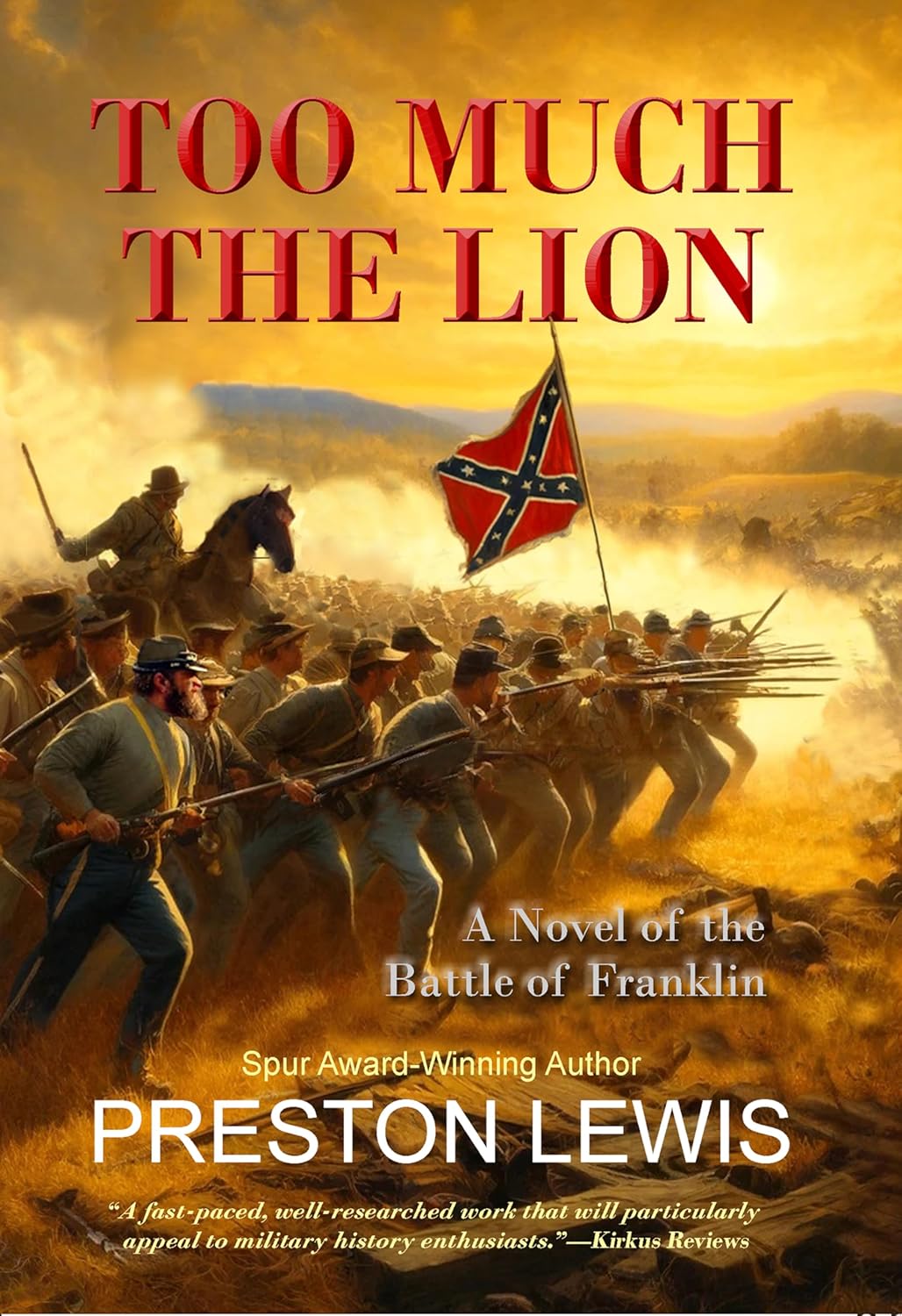
Book Title: The Finding Author: Jane Hunt Publication Date: January 7th, 2025 Publisher: Historium Press Pages: 85 Genre: Historical Fiction
This poignant novella is a tale of forbidden love, resilience, and the human cost of war.
In the quiet fields of Wiltshire during World War II, Eveline, a sheltered young woman, stumbles upon a life-altering discovery: a German Luftwaffe pilot, Fritz, has crash-landed near her home. Against the backdrop of war and suspicion, her family takes the injured man in, nursing him back to health. Beneath his reserved demeanor and burned body, Eveline senses a mystery—and something stirs an unfamiliar longing within her.
As Eveline’s infatuation deepens, she faces a storm of challenges: her overbearing mother’s rigid rules, a zealous preacher’s warnings, and the scrutiny of the town’s gossips. Despite Fritz’s attempts to keep her at arm’s length Eveline’s heart defies reason, falling for the man branded as her enemy.
But Fritz harbors secrets that could shatter Eveline’s fragile world. When the truths of war and the weight of loyalty collide, Eveline must confront the reality of loving someone forbidden.
Will their bond endure the hostility of a nation at war? Or will the scars of betrayal and loss prove impossible to heal?
Born in Reading UK, Jane grew up with a love of reading. She remembers taking Enid Blyton books to bed and reading them under the covers when she should have been asleep! Her love of the written word extended into the classroom where the teachers commented on her vivid imagination and length of stories—probably accompanied with a few sights when they realized the amount of time the reading would take!
On leaving school Jane spent a brief spell at college before finding employment as a Dental Nurse where she spent many happy years meeting lots of wonderful people and mixing lots of fillings. After meeting her husband, she later went on to have three children and found work as a Teaching Assistant.
Alongside a busy life, she completed a comprehensive writing course, which saw her having non-fiction work published in newspapers and magazines. But the desire to do something ‘creative’ burned ever brightly. Having recently undertaken a lot of research into her family tree, a desire to find out what life was really like for her ancestors took hold, and she developed a fascination with World War II. Heeding the advice of her late parents to ‘put pen to paper’, she decided to get a story that had been buzzing in her head for quit some time written.
The result of her endeavour was a very ‘raw’ manuscript: The Finding. With some professional help—thank you, Dee, the story evolved into a book—something she still can’t quite believe!
Book Title: White Feathers Series: White Feathers, Book #1 Author: Susan Lanigan Publication Date: 21/3/2025 Publisher: Idée Fixe Press Pages: 398 Genre: Historical Fiction
“Anti-war and anti-patriarchy without ever saying so – a bravura performance of effortless elegance” – Irish Echo in Australia
SHORTLISTED FOR THE ROMANTIC NOVEL OF THE YEAR AWARD 2015
In 1913, Irish emigrée Eva Downey receives a bequest from an elderly suffragette to attend a finishing school. There she finds friendship and, eventually, love. But when war looms and he refuses to enlist, Eva is under family and social pressure to give the man she loves a white feather of cowardice. The decision she eventually makes will have lasting consequences for her and everyone around her.
Journey with Eva as she battles through a hostile social order and endeavours to resist it at every turn.
Do you have a favorite time period to write about? If so, why?
Well, all my books are set in or around WWI to the 1920s. I think it was a time of great change and the instigator of a lot of the conflict we are seeing today. I recently had a flash fiction piece published which was set in Gaza and was a timeslip narrative where the souls of the dead in the Gaza War Cemetery were released from the bodies after a 2024 Israeli bombing raid. There were three battles in Gaza during WWI so it has a history of being attacked, though never to the extent that it is now.
I like that period of change and flux, where the old social norms were beginning to crumble but there were no conventions to take their place. The values held in society then were inflexible, but they crumbled under the reality of the war, with millions of men dead or shell-shocked, unable to “pull themselves together” and women out working in factories and white collar locations. The White Feather movement is an attempt to hark back to that era, but while it worked in 1914, it would probably never do so again.
Writers sometimes have furry, feathered, or scaled helpers. Do you have a writing companion?
I have recently bought myself an emotional support plant, a variety of cactus, which I sometimes bring into the office when working at my day job or on the windowsill when writing. I had the plant and a lit candle the day after Donald Trump got elected and I still found it hard to concentrate!
Do you have a routine you follow when you’re working on a book? A certain time of day when you write, or a snack you keep nearby?
In 2023 I was off work due to cancer treatment (I have made a full recovery since) and I discovered London Writers Salon. Four times a day, they hold Zoom sessions for writers in different time zones where you have 50 minutes to write. The routine really helped me during a time when the normal rhythms of life changed. At the moment I am trying to get books either traditionally published or self-published so my output is slowing down as there is a backlog of books to get out the door!
Did anyone give you writing advice when you were first getting started? Do you think it helped?
I honestly think you learn by doing. That’s how I’ve learned everything I’ve mastered to any degree. I remember reading Elective Affinities by Goethe, which was a German romantic Novelle, a very strict form of the novel. I saw how Goethe organised the plot and introduced new characters, very unsubtly. I also read a lot of Maeve Binchy and was really impressed by how she handles dramatic dialogue and ends scenes and chapters.
What is the scariest thing you face as a writer? How do you handle it?
I’ve already faced it. In 2014, White Feathers got (unfairly, in my view) trashed in a national newspaper.It was my debut novel, and I got stigmatised in the writing community as a result. Authors will murder their granny to avoid getting bad reviews and don’t believe anything you hear to the contrary. And proximity to public bad reviews is pretty much like review covid. People don’t want to be linked to you. As for the reviewer, she eventually launched her own successful career as a novelist.
One thing I’m loving about the second time around is that even though the sales are negligible, the reviews are absolutely beautiful and confirm that releasing this novel now, at a time of great turmoil (like WWI) is heart-work and spiritually important.
I suppose my second great fear arises from my first one. I’ve seen many, many writers who have crashed and burned on their first novel and never got the opportunity to make a second approach to the publishing world, no matter how much and how well they wrote. But I had to come to terms with that possibility, as corrosive resentment is not something I wish to hold in my body after the rigours of chemo and radiotherapy. Over the last year I’ve found a lot of peace and freedom after a turbulent time, and I choose joy. Even here and now.
What do you think is the most important thing to remember when following your dreams?
That if the dream goes sour, you need allies and comforters. My advice is have a good therapist on stand-by and a day job. And endeavour to separate the joy of completing the work from the grief that might come from publishing world failure. I’ve grieved a lot over writing failure. But that part of my life is now over.
Does your family support your writing?
Yes, but I don’t need too much in terms of support. I have the hour in the morning to write during school run, which is very much appreciated. I work full-time in the IT department of a large logistics company and so I do not have any financial anxiety tied to writing.
Author Bio:
Susan Lanigan’s first novel White Feathers, a tale of passion, betrayal and war, was selected as one of the final ten in the Irish Writers Centre Novel Fair 2013, and published in 2014 by Brandon Books. The book won critical acclaim and was shortlisted for the UK Romantic Novel of the Year Award in 2015. This edition is a reissue with a new cover and foreword.
Her second novel, Lucia’s War, also concerning WWI as well as race, music and motherhood, was published in June 2020 and has been named as the Coffee Pot Book Club Honourable Mention in the Modern Historical Book of the Year Award.
Susan lives by the sea near Cork, Ireland, with her family.
Book: The Tudor Queens’ Midwife Series: The Tudor Queens’ Midwife, Book 1 Author: Brigitte Barnard Publication Date: January 3rd, 2025 Publisher: independently published Pages: 299 Genre: Historical Fiction / Tudor Fiction
In the glamorous, glittering and dangerous court of king Henry VIII and his queen Katherine of Aragon, the desperate desire for a healthy male heir overshadows all. Plagued by a series of miscarriages the queen is left grappling with the weight of her singular duty to provide a son for the Crown. Amidst this turmoil the queen turns to Sarah Menendez, the most highly skilled midwife in England. Sarah, exiled from her homeland and concealing her true identity must serve the queen and battle her deepest fears. As Sarah strives to save the queen from the perils of childbirth, the specter of her own past threatens to unravel the carefully crafted identity Sarah has created for herself and her young daughter.
In a world where power, politics and religion collide, Sarah finds herself entangled in a web of intrigue and deadly danger. The fate of the queen’s unborn child, the survival of the midwife and her daughter, and the stability of the kingdom hang in the balance. Sarah Menendez must employ all of her skills, cunning and courage to protect those she holds dear as well as the life of the queen and her unborn child.
The Tudor Queens’ Midwife is a gripping tale of secrecy, sacrifice and religious turmoil amongst the most opulent court the world has ever seen.
Do you tend to read the same genre you write? I definitely read the same genre that I write, but not exclusively.
Do you have a favorite time period to write about? If so, why? My favorite time period is the Tudor era, which is why I am also writing about it.
Writers sometimes have furry, feathered, or scaled helpers. Do you have a writing companion? My writing companions are my dogs. They are Cavalier King Charles spaniels and extremely attached to me. They are draped across my lap and I am surrounded on all sides by them! It makes getting up very challenging.
How long have you been writing, and how long did it take before your first book was published? I have been writing only a couple of years. I am very happy to have made many fans and have received a book contract with Pen and Sword Publishing. My first published book was in January 2025.
Do you have a routine you follow when you’re working on a book? A certain time of day when you write, or a snack you keep nearby? I am pretty disciplined about my writing. I write every day, for as long as possible. Some days I might write eight hours and some days maybe only a couple, it depends on what else is happening in my life on any particular day.
If you could pick your top 3 favorite books of all time, what would they be? My favorite books are all by Colette. The first is my favorite and it is called Sido / My Mother’s House. Second choice is actually a trilogy called Claudine.
Author Bio:
Brigitte Barnard is an amateur historian of Renaissance English history and an author of the trilogy The Tudor Queens’ Midwife, of which the first book in the series is available. She is currently writing a non-fiction book about Tudor midwifery for Pen and Sword publishing house.
Brigitte is a former homebirth midwife, and she lives at home with her husband and four children. She also raises Cavalier King Charles spaniels.
In the summer of 1914, 16-year-old Evan Sinclair leaves home to join the
Great War for Civilization. Little does he know that, despite the war raging
in Europe, the true source of conflict will emerge in Ottoman Palestine,
since it’s from Jerusalem where the German Kaiser dreams to rule as Holy
Roman Emperor. Filled with such historical figures as Gertrude Bell, T.E.
Lawrence, Winston Churchill, Faisal bin Hussein, Chaim Weizmann, and Achad
Ha’am, “Wages of Empire” follows Evan through the killing
fields of the Western Front where he will help turn the tide of a war that
is just beginning, and become part of a story still being written.
Readers who enjoy Wages of Empire should know that the story continues with
the sequel, Crossroads of Empire, the second book in this series.
About the Author
Michael J. Cooper emigrated to Israel in 1966 and lived in Jerusalem during
the last year the city was divided between Israel and Jordan. He graduated
from Tel Aviv University Medical School, and after a forty-year career as a
pediatric cardiologist in Northern California, he continues to do volunteer
missions serving Palestinian children who lack access to care.
His historical fiction novels include Foxes in the Vineyard, set in 1948
Jerusalem, which won the 2011 Indie Publishing Contest grand prize and The
Rabbi’s Knight, set in the Holy Land in 1290. Wages of Empire won the
2022 CIBA Rossetti Award for YA fiction along with first-place honors for
the 2022 CIBA Hemingway award for wartime historical fiction.
He lives in Northern California with his wife and a spoiled-rotten cat.
Three adult children occasionally drop by.
The Fires of Gallipoli is a heartbreaking portrayal of friendship forged in the trenches of the First World War.
‘In this vivid and engaging novel of war and friendship, Barney Campbell shows us once again that he is a natural writer. This is a novel of men at arms of the highest quality.’ ~ Alexander McCall Smith
Edward Salter is a shy, reserved lawyer whose life is transformed by the outbreak of war in 1914. On his way to fight in the Gallipoli campaign, he befriends the charming and quietly courageous Theodore Thorne. Together they face the carnage and slaughter, stripped bare to their souls by the hellscape and only sustained by each other and the moments of quiet they catch together.
Thorne becomes the crutch whom Edward relies on throughout the war. When their precious leave from the frontline coincides, Theo invites Edward to his late parents’ idyllic estate in Northamptonshire. Here Edward meets Thorne’s sister Miranda and becomes entranced by her.
Edward escapes the broiling, fetid charnel-house of Gallipoli to work on the staff of Lord Kitchener, then on to the Western Front and post-war espionage in Constantinople. An odd coolness has descended between Edward and Theo. Can their connection and friendship survive the overwhelming sense of loss at the end of the war when everything around them is corrupted and destroyed?
The Fires of Gallipoli is a heartbreaking, sweeping portrayal of friendship and its fragility at the very limits of humanity.
Edward’s thick jumper proved its mettle and he slept soundly, stirring only around midnight as a snuffling deer broke nearby branches around the edge of the tree. He was awake for a few minutes while memories of nights on the front came to him, staring out into a dark night or peeping fearfully over the parapet when a baleful alabaster shone over the Peninsula in a sniper’s moon. He remembered nights on the line as he and Thorne tried desperately to suppress their chuckles into yelps of breathing. He was sure that he let out a giggle into the night before nothingness then fell over him, dreamless and warm.
He woke with his thighs damp from dew and drew away the groundsheet to see the million droplets on the cow parsley sparkle gold and rainbow colours from the low sun breaching the underside of the tree. A ghostly network of spiders’ webs hung above his head, made fuller by the dew, more ossified. He felt an awful pang, as Thorne stirred beside him, that he wasn’t able to see any of it.
They wormed out from under the tree and creaked limbs back to life, shaking away the residue of sleep and rubbing their sandpaper chins, teeth chattering at the morning’s chill. They got ready to go, the imprint of their bodies in the cow parsley already disappearing as the crushed stalks started to lean up again, and they rejoined the path and carried on.
The route took them over miles of gentle fields and woods, folds in the ground offering one of the most beautiful mornings Edward could remember; folds that, on a battlefield, would become must-take ridges and valleys raked by machine gun fire. Here though was a perfect land, unpoisoned by such snaky heads. The rising sun, still yet to gain its heat, uncovered spring’s half-built hedgerows as nearby woodpeckers saluted their arrival. So infrequent was any sign of habitation, with only a couple of soft yellow stone farmhouses nestling nearly invisibly into their surroundings, that it seemed for a time that they were walking through a zero-humaned world.
About the Author
Barney Campbell, author of The Fires of Gallipoli, was brought up in the Scottish Borders and studied Classics at university. He then joined the British Army where he commanded soldiers on a tour of Helmand Province, Afghanistan at the height of the war there.
That experience inspired him to write his first novel Rain, a novel about the war, which was published by Michael Joseph in 2015. The Times called it ‘the greatest book about the experience of soldiering since Robert Graves’s First World War classic Goodbye To All That’.
Barney has walked the length of the Iron Curtain, from Szczecin in Poland to Trieste in Italy. He currently works and lives in London.
THE USURPER KING by Mercedes Rochelle Book 4 of The Plantagenet Legacy
Blurb:
From Outlaw to Usurper, Henry Bolingbroke fought one rebellion after another.
First, he led his own uprising. Then he captured a forsaken king. Henry had no intention of taking the crown for himself; it was given to him by popular acclaim. Alas, it didn’t take long to realize that that having the kingship was much less rewarding than striving for it. Only three months after his coronation, Henry IV had to face a rebellion led by Richard’s disgruntled favorites. Repressive measures led to more discontent. His own supporters turned against him, demanding more than he could give. The haughty Percies precipitated the Battle of Shrewsbury which nearly cost him the throne—and his life.
To make matters worse, even after Richard II’s funeral, the deposed monarch was rumored to be in Scotland, planning his return. The king just wouldn’t stay down and malcontents wanted him back.
THE ACCURSED KING by Mercedes Rochelle Book 5 of The Plantagenet Legacy
Blurb:
What happens when a king loses his prowess?
The day Henry IV could finally declare he had vanquished his enemies, he threw it all away with an infamous deed. No English king had executed an archbishop before. And divine judgment was quick to follow. Many thought he was struck with leprosy—God’s greatest punishment for sinners. From that point on, Henry’s health was cursed and he fought doggedly on as his body continued to betray him—reducing this once great warrior to an invalid.
Fortunately for England, his heir was ready and eager to take over. But Henry wasn’t willing to relinquish what he had worked so hard to preserve. No one was going to take away his royal prerogative—not even Prince Hal. But Henry didn’t count on Hal’s dauntless nature, which threatened to tear the royal family apart.
All titles in the series are available to read on #KindleUnlimited.
Author Interview
Often writers started out as readers. Was there a particular book that inspired you to be an author?
When I was a kid, I was absolutely blown away by “Black Beauty”, and I told my mother I wanted to be a writer. She pooh-poohed me! That set me back. It wasn’t until my college days that I was inspired after reading “The Hunchback of Notre Dame”. I think that book also gave me the idea about historical fiction, though it took years to germinate.
Do you tend to read the same genre you write?
Yes, I’m sorry to say. Other genres don’t hold my interest, and I know this is a weakness. There are exceptions, of course, but pretty few and far between. I love Anne Rice! And Nero Wolfe books.
Do you have a favorite time period to write about? If so, why?
I love the middle ages, especially European. I owe this fascination to a reenactment group called the SCA (Society for Creative Anachronism), which I enjoyed for thirty years.
How long have you been writing, and how long did it take before your first book was published? I started writing in the early ‘80s, a few years out of college. I moved to NYC to be near the publishing center of the world, but it didn’t serve me well and I took 20 years off to pursue a career. I didn’t want to be a starving writer my whole life! I did publish that first book in 2014.
Did anyone give you writing advice when you were first getting started? Do you think it helped?
When I was in my mid-20s (back to the previous question), I had a writer boyfriend who persuaded me to write a book with him. I think I did it to shut him up, but got caught up in the project. However, I didn’t like the way he was progressing in the story, so I went off on my own and wrote it my way! And yes, this was the same book I mentioned before.
If you could pick your top 3 favorite books of all time, what would they be?
I adored THE THREE MUSKETEERS, which was another huge inspiration for me. I think my second favorite is THE WHITE COMPANY by Arthur Conan Doyle. He was truly a marvelous historical fiction author. I also love THE FIRST MAN IN ROME by Colleen McCullough, which I picked up by accident at a yard sale. What a find!
Does your family support your writing?
I sell Real Estate when I’m not writing, though my husband does support me between house sales! Because my books are niche market, I never expect to make a living at my writing. Whenever I exhibit personally at a fair, I am constantly reminded that most of the public have no clue about the middle ages. If I’m lucky, they will remember the king under the parking lot, but even so, it’s the wrong Richard (I wrote about Richard II). It’s very sobering. So I call writing my hobby. I’m grateful for my close circle of readers.
Author Bio:
Mercedes Rochelle is an ardent lover of medieval history, and has channeled this interest into fiction writing. She believes that good Historical Fiction, or Faction as it’s coming to be known, is an excellent way to introduce the subject to curious readers.
Her first four books cover eleventh-century Britain and events surrounding the Norman Conquest of England. Her new project is called “The Plantagenet Legacy” taking us through the reigns of the last true Plantagenet King, Richard II and his successors, Henry IV, Henry V and Henry VI. She also writes a blog: HistoricalBritainBlog.com to explore the history behind the story.
Born in St. Louis, MO, she received by BA in Literature at the University of Missouri St.Louis in 1979 then moved to New York in 1982 while in her mid-20s to “see the world”. The search hasn’t ended!
Today she lives in Sergeantsville, NJ with her husband in a log home they had built themselves.
Hated as a foreigner, despised as a woman, she became First Lady of Athens.
Aspasia falls passionately in love with Pericles, the leading statesman of Fifth Century Athens. Artists, writers and thinkers flock to her salon. She hides her past as a sex-worker, trafficked to the city, and becomes Pericles’ lover.
Her writings attract the attention of Socrates, and she becomes the only woman to join his circle. She is known throughout the city for her beauty and wit and strives to become recognised as an intellectual alongside men.
Pericles’ enemies attack him through Aspasia and charge her with blasphemy. As a foreigner she faces execution, but her impassioned address to the jury shames the city and saves her. Pericles is spellbound, they marry, and she becomes First Lady of Athens.
Sparta besieges the city; plague breaks out and Pericles is once again in danger.
THE IMMIGRANT QUEEN tells the true story of how Aspasia rose to become the First Lady of Athens and triumphed against all the odds.
Often writers started out as readers. Was there a particular book that inspired you to be an author?
So many! I read voraciously as a child. “The Secret Garden” holds a special place, it is so warm – and Silas Marner. If only I could write like that!
Do you tend to read the same genre you write?
No, I read in all directions – novels I pick up in the book shop and the library, Booker recommendations, items from blog posts, my partner’s reading group. It has to engage me in the first ten pages, but really I read for enjoyment.
Do you have a favorite time period to write about? If so, why?
Again no. It’s really trying to visualize what it was like for people, human like me, but in a different world with different beliefs and rules. I am fascinated by Athens and am currently writing another story set there.
Writers sometimes have furry, feathered, or scaled helpers. Do you have a writing companion?
My companion is the East Kent countryside, so beautiful at this time of year. I do love the colours of Autumn. Whenever something isn’t going right, I just take a walk.
How long have you been writing, and how long did it take before your first book was published?
I’ve been writing as long as I can remember, all sorts of things. Sometimes I wake up with a story in my head and need to put it down before I lose it. Sometimes I can see characters and I know their feelings from their body language, but I can’t hear what they are saying to each other.
Do you have a routine you follow when you’re working on a book? A certain time of day when you write, or a snack you keep nearby?
No, when I have an idea I write relentlessly. Then I have to spend hours rewriting and rewriting the next day.
Did anyone give you writing advice when you were first getting started? Do you think it helped?
Yes definitely, and a lot of it was good advice. If only I’d taken it I would have moved a lot faster. But you only really learn through your experiences I find.
What is the scariest thing you face as a writer? How do you handle it?
Blank paper – and suddenly there is nothing in your head. You just have to face it down, write about anything, the view from the window, an incident on the bus yesterday, your children and after a while it will come.
About the Author
Peter Taylor-Gooby is an academic who believes that you can only truly understand the issues that matter through your feelings, your imagination and your compassion. That’s why he writes novels as well as research monographs. He worked in India as a teacher, in a Newcastle social security office and as an antique dealer.
Now he’s professor of social policy at the University of Kent, a Fellow of the British Academy, loves playing with his grandchildren and writes novels in what time is spare.
‘Right from page one you know you are in the hands of a talented storyteller… An exciting tale of espionage and adventure in the classic mould.’
~ R.N. Morris, author of The Gentle Axe
1808.
Captain Will Fraser has just returned from the Front in the Peninsular War. He is disgraced and penniless, the victim of a conspiracy led by a jealous and influential officer. Fraser has been falsely accused of insubordination and cowardice and dismissed from his regiment.
Fraser and Duncan Armstrong, his wounded Sergeant, arrive in London to seek out Will’s brother, Jack, who works for King George’s Government.
But Jack has disappeared. He vanished from his lodgings a week ago and no one has seen him since. Friends and colleagues are baffled by his disappearance as is the young woman, Clara, who claims to be his wife.
Then Will is viciously attacked, seemingly mistaken for his brother, and only just escapes with his life. When news of this reaches Jack’s colleagues in Government, Will is recruited to find his brother and he and Armstrong set out to follow a trail littered with half-truths and misinformation.
For their task is not quite what it seems.
Will closely resembles his brother and it becomes evident that he is being used as a decoy to flush out Jack’s enemies. These are enemies of the State, for Jack Fraser is a spy and his colleagues believe he has uncovered evidence which will lead to the identity of a French spymaster embedded in the British Government.
Will’s search leads him to France but in this murky world of espionage, nothing is straightforward.
The soldier turned spy must unmask a traitor, before it’s too late.
This title is available to read on #KindleUnlimited.
Guest Post
When I was asked to write a series of novellas set during the Napoleonic Wars, I knew I would find it a daunting task but what particularly interested me was the secret war against Napoleon. That underbelly of every war where agents pass information to their handlers through secret channels, where things are not always what they seem, where the most unlikely people turn out to be working for the enemy. So, the work of spies is the main focus of my stories.
Although there was high level espionage, there were also many ordinary French citizens, including fishing families, shopkeepers and others who wished to undermine Napoleon’s rule. They were working for the British and provided shelter for British spies – and girls and women often dressed as men to avoid detection. There was a respected French priest (with a beautiful mistress) who was an agent for the British – and a schoolmaster on the Normandy coast who passed on French naval signals to the British so that their ships would be let through as French.
Then there were those who regularly crossed the Channel, legally, spying for their country’s enemies in plain sight. And, of course, there were double agents, too, one of whom is the mysterious traitor mentioned in my story.
The ‘Soldier Spy’ stories are historical fiction but real people appear in them – the head of the Alien Office, a Jersey fisherman, a Catholic priest and a renowned codebreaker, among others.
In the first of these stories, ‘Traitor’s Game’, my main protagonist, Captain Will Fraser, is sent home from the Peninsular War in disgrace, wrongly accused of insubordination and cowardice. In London he seeks out his brother, Jack, only to find that Jack has vanished and, in order to find him, Will reluctantly becomes entangled in the murky world of espionage.
Can he track down a double agent before more secrets are passed to the enemy and a murder is committed?
About the Author
Rosemary Hayes has written over fifty books for children and young adults. She writes in different genres, from edgy teenage fiction (The Mark), historical fiction (The Blue Eyed Aborigine and Forgotten Footprints), middle grade fantasy (Loose Connections, The Stonekeeper’s Child and Break Out) to chapter books for early readers and texts for picture books. Many of her books have won or been shortlisted for awards and several have been translated into different languages.
Rosemary has travelled widely but now lives in South Cambridgeshire. She has a background in publishing, having worked for Cambridge University Press before setting up her own company Anglia Young Books which she ran for some years. She has been a reader for a well-known authors’ advisory service and runs creative writing workshops for both children and adults.
Rosemary has now turned her hand to adult fiction and her historical novel ‘The King’s Command’ is about the terror and tragedy suffered by a French Huguenot family during the reign of Louis XIV.
And Traitor’s Game, the first book in the Soldier Spy trilogy, set during the Napoleonic Wars, has recently been published.
Book Title: The King’s Intelligencer Sub Title: Discovering the Missing Princes in the Tower Author: Elizabeth St.John Publication Date: 15th October, 2024 Publisher: Falcon Historical Pages: 494 Genre: Historical Fiction
London, 1674: When children’s bones are unexpectedly unearthed in the Tower of London, England’s most haunting mystery—the fate of the missing princes—is reignited.
Franny Apsley, trusted confidante to Charles II’s beloved niece and heir, Lady Mary Stuart, is caught up in the court’s excitement surrounding the find. Yet, as a dark family secret comes to light, Franny realises the truth behind the missing princes is far more complex—and dangerous—than anyone suspects. Recruited by her formidable cousin Nan Wilmot, Dowager Countess of Rochester, to discover the truth behind the bones, Franny is thrust into the shadowy world of intelligencers. But her quest is complicated by an attraction to the charismatic court artist Nicholas Jameson, a recent arrival from Paris who harbours secrets of his own.
Pursued by Nicholas, Franny searches for evidence hidden in secret family letters and paintings, and uncovers a startling diplomatic plot involving Lady Mary, which causes Franny to question her own judgment, threatens the throne, and sets England on a course for war. With only her courage and the guidance of an enigmatic spy within the royal household, Franny must decide how far she will go to expose the truth—and whether that truth will lead to England’s salvation or her own heartbreak.
In a glittering and debauched society where love is treacherous and loyalty masked, Franny must navigate a world where a woman’s voice is often silenced and confront the ultimate question: What is she willing to risk for the sake of her country, her happiness, and her family’s safety?
A captivating historical novel of conspiracy, passion, and courage, The King’s Intelligencer is one woman’s quest for a truth that could change the fate of a nation. A companion to the critically acclaimed best-selling novels The Godmother’s Secret and The Lydiard Chronicles, The King’s Intelligencer weaves together beloved characters and actual events to bring a suspenseful mystery to life.
Buy Links:
This title is available to read on #Kindle Unlimited.
The inspiration for The King’s Intelligencer arose from my research for The Godmother’s Secret, centred on the missing princes in the Tower of London. During this time, I visited Westminster Abbey, particularly the Chapel of the Innocents, where Sir Christopher Wren’s marble urn, commissioned by Charles II in 1674, supposedly contains the bones of Edward V and Richard, Duke of York. The princes, according to the inscription, were murdered by their “perfidious uncle Richard the Usurper” and buried secretly in the Tower for 191 years. Standing near the urn, close to where my character Franny Apsley’s parents, Sir Allen and Frances Apsley, are buried, I began to question this narrative.
Helen Maurer’s paper Bones in the Tower: A Discussion of Time, Place and Circumstance raises doubts about the authenticity of these remains, as does Annette Carson’s article The Bones in the Urn. What if these bones weren’t the princes’ at all, but rather a politically convenient find for Charles II, helping to secure his throne during a period of intense religious and political tension?
The 17th century was marked by deep divides between Protestants and Catholics. While Charles II outwardly practiced Protestantism, he secretly favoured Catholicism and even converted on his deathbed. His brother, James II, was openly Catholic, which led to his brief reign before being overthrown by his Protestant daughter, Mary, and her husband, William of Orange.
In this climate of political and religious conflict, espionage thrived. “Intelligencers” gathered information through subtle means, often operating unofficially. Franny Apsley, the protagonist of The King’s Intelligencer, navigates this secretive world. In real life, Franny’s family was deeply involved in espionage, including her parents, Allen and Frances Apsley, and her cousin Nan Wilmot, Countess of Rochester. Nan was known for deceiving Oliver Cromwell during the English Civil War, and supplying arms to Charles II, while after the Restoration, Franny’s brother, Peter Apsley, worked as an intelligencer for Charles II and James II, receiving substantial payments for his covert activities.
Wanting to not only write about family history, but place it in the context of the wider national landscape, I incorporated into the novel another fascinating discovery – King Charles II’s Secret Treaty of Dover. In this treaty, Charles secretly agreed to declare himself a Catholic in exchange for financial support from King Louis XIV of France. Although I fictionalized elements of another treaty between James and the French King, it was well-known at the time that Charles and James were deeply involved in secret negotiations with France, many of which were hidden from the public for over a century.
This companion to The Godmother’s Secret and The Lydiard Chronicles blends historical fact with fiction, following Franny Apsley as she embarks on a dangerous quest for truth, unveiling hidden secrets that could reshape the past.
About the Author:
Elizabeth St.John’s critically acclaimed historical fiction novels tell the stories of her ancestors: extraordinary women whose intriguing kinship with England’s kings and queens brings an intimately unique perspective to Medieval, Tudor, and Stuart times.
Inspired by family archives and residences from Lydiard Park to the Tower of London, Elizabeth spends much of her time exploring ancestral portraits, diaries, and lost gardens. And encountering the occasional ghost. But that’s another story.
Living between California, England, and the past, Elizabeth is the International Ambassador for The Friends of Lydiard Park, an English charity dedicated to conserving and enhancing this beautiful centuries-old country house and park. As a curator for The Lydiard Archives, she is constantly looking for an undiscovered treasure to inspire her next novel.
Elizabeth’s works include The Lydiard Chronicles, a trilogy set in 17th-century England during the Civil War, and The Godmother’s Secret, which unravels the medieval mystery of the missing princes in the Tower of London. Her latest release, The King’s Intelligencer, follows Franny Apsley’s perilous quest to uncover the truth behind the sudden discovery of the princes’ bones. In Charles II’s court of intrigue and deceit, Franny must decide what she’ll risk—for England’s salvation, her family’s safety, and her own happiness.
Every October I make these amazing double chocolate chip cookies and it’s easy to say that they are a hit with both children and adults! They are soft and chewy with just the right amount of chocolate, but it’s the candy eyeballs that are the star of the show!
INGREDIENTS
• ½ cup unsalted butter, room temperature
• ½ cup granulated sugar
• ½ cup dark brown sugar, packed
• optional: black food coloring
• 1 large egg
• 1 teaspoon vanilla extract
• 1 cup all-purpose flour
• ½ cup + 2 Tbsp. Hershey’s Special Dark Cocoa Powder
• 1 teaspoon baking soda
• ¼ teaspoon salt
• 2 Tbsp. milk
• 1 1/2 cups chocolate chips (I use semi-sweet)
• Candy Eyeballs for topping the cookies
INSTRUCTIONS
1. Preheat oven to 350˚ F. Line baking sheets with parchment paper. Using an electric mixer, combine the butter and sugars. You can add black food coloring at this time to get a deeper shade of black in the cookies. Beat together on medium-high speed until light and fluffy, 2-3 minutes. Blend in the egg and vanilla, scrape down the bowl if needed.
2. In a separate bowl, whisk together the flour, cocoa powder, baking soda, and salt. Slowly add the dry ingredients into the wet ingredients in the mixer on low speed just until mixed. Mix in the milk on the lowest speed and fold in the chocolate chips.
3. Roll about 2 tablespoons of dough into balls and place on the baking sheets. Flatten slightly. Top cookies with candy eyeballs.
Place cookie sheet in freezer for 10-15 minutes.
4. Bake for 10-11 minutes. Let cool on the baking sheets for about 5 minutes, then transfer to a wire rack to cool completely. ENJOY!
Immortal Wounds
Immortal Wounds Series
Book One
Angie Barton
Genre: Fantasy/Historical Fiction/Magical Realism
Publisher: Angie Barton
Date of Publication: April 22, 2022
ISBN: 979-8990647206
ASIN: BOD9XTF25K
Number of pages: 392
Word Count: 93,000
Cover Artist: Donnell McKenzie
Tagline: Did Isobel make an error in landing in the wrong time, or was it part of her destiny?
Book Description:
After witnessing the brutal deaths of her mother and husband, Isobel overhears a confession from one of the murderers, a ruthless vampire who claims to be her father. For fear that she and her unborn daughter’s death could come next, Isobel uses the only magic she possesses and summons a portal to take her two hundred years in the past to revisit an ancestor in Scotland who she believes may know the truth of her parentage. However, in her haste, Isobel lands in the wrong century. Before she realizes her mistake, she stumbles upon a family: a ferocious Highland warrior and his two sisters.
Isobel could not have prepared herself for what she discovers during her stay: the vampire who claimed to be her father, alive three hundred years in the past! With the help of Meg, the youngest sister, and Mariam, both women’s ancestor, Isobel finds herself belonging in a world she never dreamed of—one entangled with vampires and webbed with revenge, curses, and a prophecy that has dictated all of their lives for the last four hundred years.
Did Isobel make an error landing in the wrong time, or was it part of her destiny?
Award winning author, Angie Barton, published her first novel, Immortal Wounds, in 2022. Angie’s love for writing centers around the fantasy genre, but she also enjoys writing thriller and romance. Her passion for reading, which led to her love of writing, began in elementary school with the Scholastic Book program. Her parents, who are life-long avid readers, have been a huge influence on her reading. Therefore anything and everything Angie could get her hands on she read.
Angie has been an early childhood educator since 1986 and hold a B.S. in Child Development. Her love for literacy has continued throughout her career, not only for herself, but also with the children she has cared for and taught. What Angie is most passionate about is helping others discover the excitement that reading brings. Her greatest desire in writing is to create and bring joy and entertainment to everyone she touches.
Currently, if Angie isn’t reading at least three books at a time or working on a rough draft for her next book, she can be found outdoors gardening, woodworking, or relaxing by her pond. She shares that she’s a Capricorn, tried and true, drinks way too much tea, and that her “to be read” pile of books can spike at any time.